Medical Herbalist: Herbal Medicine Training to Become a Herbalist
Blog Contents
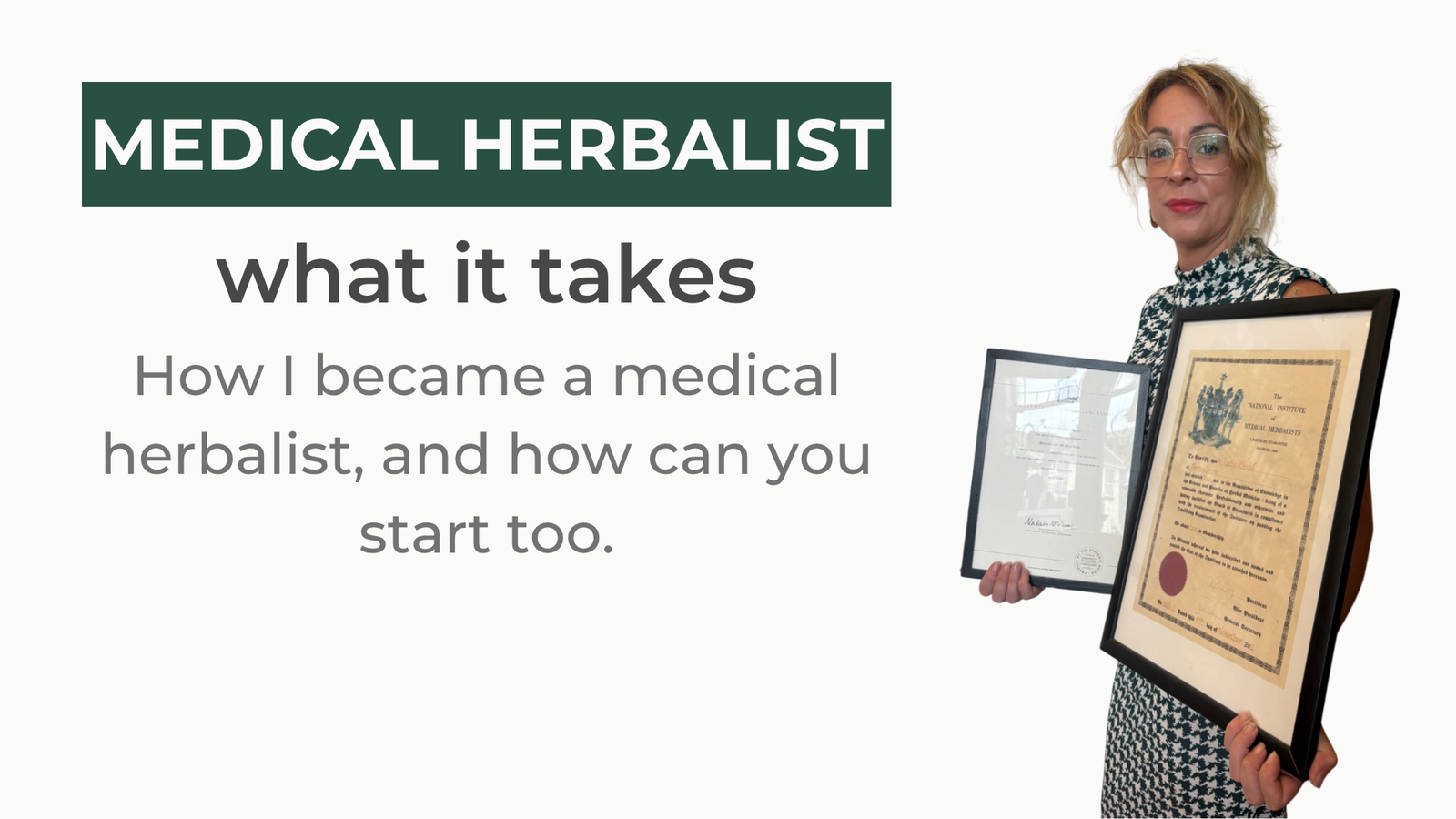
Medical Herbalist: Herbal Medicine Training to Become a Herbalist
When people hear the word herbalist, I sometimes wonder what image comes to mind.
Perhaps they imagine someone who has done a weekend course, read a few books, made a few teas, and then started giving out herbs. I understand why people might think that, because herbal medicine is often presented in a very simplified way. But for me, and for many traditionally trained practitioners, the reality could not be further from that picture.
Being a medical herbalist is not a hobby title to me. It represents years of study, clinical supervision, sacrifice, patient care, professional responsibility, and a deep respect for both plants and people.
What does medical herbalist really mean?
A medical herbalist is trained to work with herbal medicines in a clinical, person-centred way. That does not mean simply matching a herb to a symptom. It means taking time to understand the person in front of you, including their medical history, medication, diet, sleep, stress, digestion, energy, lifestyle, emotional wellbeing, and the wider picture of what may be contributing to their concerns.
In my own practice at Budd’s Herbal Apothecary on Albert Road in Portsmouth, this is the part of the work I value so much. People are rarely simple. Their stories are layered. A full consultation gives us time to listen properly, look for patterns, and decide whether herbal medicine is appropriate, whether further investigation may be needed, or whether the safest advice is to speak with a GP or another healthcare professional.
This is why proper training matters. Herbs are natural, but natural does not automatically mean suitable for everyone. Plants contain active constituents. Some herbs may be unsuitable alongside certain medicines, during pregnancy, while breastfeeding, before surgery, or for people with particular medical conditions. Responsible herbal practice requires knowledge, care, and humility.
My herbal medicine training began in 2000
My own journey into herbal medicine began in 2000, when I started training at the University of Middlesex. At the time, Middlesex was one of the pioneering universities offering Herbal Medicine as a degree programme. It felt exciting, serious, and groundbreaking. This was not a casual short course. It was a Bachelor of Science degree, and the training was intense from the very beginning.
During my first year, life took an unexpected but wonderful turn. I became pregnant with my son, Rowan. Becoming a mother changed everything. I took a couple of years out from my studies, and when the time came to return, I had a big decision to make.
Middlesex meant travelling to North London, and I knew in my heart that I did not want to take my young child there while trying to manage such a demanding degree. So I returned to study at the University of Central Lancashire in Preston.
Preston was excellent, but it was also far away from home. It meant long journeys, time away from family, and a huge amount of sacrifice. Looking back now, I sometimes wonder how I managed it all. But I was determined. I knew herbal medicine was the path I was meant to follow.
I qualified in 2006 with a Bachelor of Science degree in Herbal Medicine, and I have been in full-time practice ever since.
What herbal medicine training actually involved
Good herbal medicine training is wide-ranging because the work itself is wide-ranging. We had to study the plants, but we also had to study people, health, disease processes, communication, ethics, and clinical safety.
My training included anatomy and physiology, pathology, clinical examination skills, nutrition, pharmacology, herbal pharmacognosy, materia medica, botany, counselling skills, case taking, and the safe prescribing of herbal medicines.
We had to understand not only the plants themselves, but how the body works, how disease processes may develop, how conventional medicines act in the body, and how herbs may interact with medication. That last point is incredibly important. Herbal medicine is not always “just a cup of tea” when used professionally. In clinical practice, herbs are selected carefully, taking into account the person, the preparation, the dose, the wider context, and any safety considerations.
As students, we also had to complete supervised clinical training. This meant sitting in clinic, observing, learning how to take a full consultation, understanding medical histories, looking at medication lists, asking the right questions, and slowly developing the confidence and skill to work with real people, not textbook examples.
That clinical training was essential. Books can teach theory, but clinic teaches you how complex human beings really are. It teaches you how to listen, when to pause, when to ask more, when to refer, and how to work safely within your scope of practice.
A full consultation is different from over-the-counter advice
At Budd’s Herbal Apothecary, we are always happy to help customers and offer general guidance over the counter where appropriate. Sometimes someone simply wants to know how to prepare a tea, what a tincture is, or whether a product contains a certain ingredient.
However, there are many circumstances where a full consultation with a medical herbalist is by far the better option. If someone is taking prescribed medication, has a long-term health issue, has several symptoms, is pregnant or breastfeeding, has multiple complications, or is unsure whether a herb is suitable for them, a quick chat in the shop is not enough.
A full consultation allows time to take a careful history, review relevant details, consider safety, and decide whether herbal support is appropriate. It is not about rushing people towards a product. It is about taking the time needed to work responsibly.
Why I still love being a medical herbalist
Qualifying was only the beginning. Building my own practice and business has been another journey altogether. It has been tough at times. A real roller coaster. There have been highs, lows, financial worries, long hours, constant learning, and many moments where I have had to dig deep and keep going.
But there has also been enormous reward.
Since 2006, I have had the privilege of working with thousands of people in clinic and in the apothecary. I have blended teas, tinctures, creams, oils, and bespoke herbal preparations. I have listened to people’s stories, looked for patterns, and continued learning year after year.
At Budd’s Herbal Apothecary, people often comment on the calm and welcoming atmosphere. That matters to me. A good herbal practice is not only about the herbs on the shelves. It is also about how people feel when they walk through the door. Do they feel heard? Do they feel respected? Do they feel they can ask questions without being dismissed?
After all these years, I still love what I do. I love the plants, the clinical thinking, the apothecary, the teaching, the making, the problem solving, and the privilege of being trusted with people’s stories.
Helping the next generation become a herbalist
Today, I also have the privilege of helping to train the next generation of herbal students through my student clinic at Temperance Health in Gosport. Many of the students who come through my clinic are studying with Heartwood and Betonica, and it is wonderful to now be in a position where I can support them on their own journey.
Having been through the intensity of herbal training myself, I know how much dedication it takes to become a herbalist. Students need knowledge, but they also need confidence, maturity, communication skills, practical experience, and the ability to think clearly in clinic.
Supporting students feels like a full-circle moment. I remember being the student, trying to absorb the science, the tradition, the plant knowledge, the patient stories, and the responsibility of it all. To now help new students develop their own clinical skills and understanding of real patient care is something I feel very proud of.
Training routes have changed
Today, the routes into herbal medicine look different from when I trained. University-based herbal medicine degrees are much less common than they were, and many students now study through specialist herbal medicine schools and professional training institutes. Some courses include a mixture of online academic learning, in-person teaching, clinic observation, and supervised clinical practice.
In many ways, this has opened the door for people who would never have been able to move away, travel long distances, or fit a traditional university route around family life. I think that can be a positive thing, provided the depth, professionalism, and clinical safety of the training are maintained.
Herbal medicine needs well-trained practitioners. It needs people who understand traditional plant knowledge, modern clinical safety, medicine interactions, professional boundaries, and the importance of ongoing learning.
Herbal medicine is not a quick fix profession
Herbal medicine is not easy, fluffy, or simplistic. It is a serious discipline rooted in traditional knowledge, modern science, observation, experience, and respect. It requires study, dedication, safety, humility, and years of practice.
So when I call myself a medical herbalist, that title carries a lot of history for me.
It carries the young woman who started at Middlesex in 2000. It carries the mother who made the difficult decision not to take her young son to North London. It carries the long journeys to Preston. It carries the sacrifices, the study, the clinic hours, the exams, and the determination to qualify.
It also carries nearly two decades of full-time practice, business building, patient care, student teaching, and continual learning. Most of all, it carries a deep respect for the plants, for the people who come to see me, for the students I now help to train, and for the profession of herbal medicine itself.
Interested in learning herbal medicine?
If you are interested in learning more about herbal medicine, but you are not sure whether you want to commit to a full professional training programme, my Herbalversity™ courses could be the perfect place to begin.
These courses are designed for people who want to learn practical, traditional herbal skills in a friendly and supportive environment. You do not need previous experience, just curiosity, enthusiasm, and a love of plants.
The next course running is Make Your Own Herbal First Aid Kit, starting on Monday 10 August 2026 and running for 5 consecutive days.
The course will be held at Temperance Health, 25 High Street, Gosport.
Over the 5 days, we will explore simple, practical herbal preparations that you can make at home, including teas, infused oils, balms, salves, syrups, steam inhalations, and more. The focus is education, confidence, safe preparation methods, and traditional home herbal skills.
Spaces are limited, so early booking is recommended.
Find out more and book your place on Herbalversity™.
This article is for general education only. It is not medical advice. If you are taking medication, pregnant, breastfeeding, awaiting surgery, or living with a diagnosed condition, please seek individual advice from a suitably qualified professional before using herbal products.