Herbal First Aid Kit Course: Make Herbal Remedies
Blog Contents
Herbal First Aid Kit Course: Make Herbal Remedies
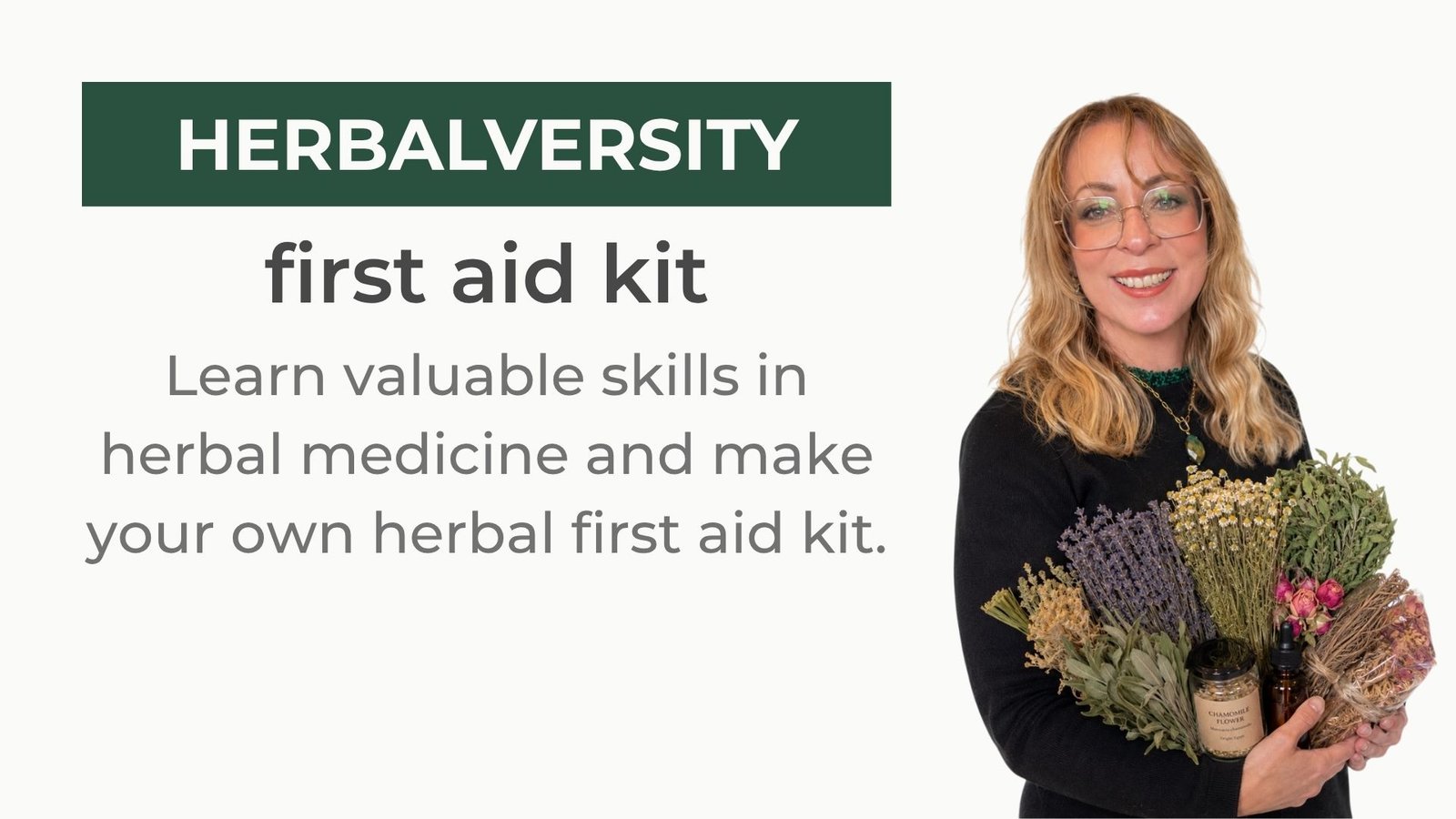
Would you love to learn how to make your own traditional herbal preparations and build a beautiful, practical herbal first aid kit to take home? This August, Wendy Budd of Budd’s Herbal Apothecary will be teaching a special five-day Herbalversity practical course at Temperance Health in Gosport.
This friendly, hands-on herbal first aid kit course is designed for complete beginners, families and anyone who wants to feel more confident working with everyday herbs in a safe, responsible and enjoyable way. Over five consecutive days, you will explore how plants can be prepared as teas, infusions, compresses, infused oils, syrups, salves, balms and aromatic preparations.
The emphasis is practical learning. You will not simply watch demonstrations. You will make the preparations yourself, learn why particular ingredients are chosen, label and package your creations, and take home your completed herbal first aid kit at the end of the week.
Course details at a glance
- Course: Make Your Own Herbal First Aid Kit, a five-day Herbalversity practical course
- Dates: Monday 10 August to Friday 14 August 2026
- Location: Temperance Health, 25 High Street, Gosport
- Special family price: £250 for one adult and one child aged six or over
- Includes: tuition, herbs, oils, waxes, containers, labels, notes, recipes and take-home preparations
- Booking: Visit https://buddsherbalmedicine.com/herbalversity/
Why join this herbal first aid kit course?
Many people have a cupboard full of dried herbs, oils or natural products, but do not always know how to use them confidently. This course has been created to bridge that gap. You will learn the basic principles behind traditional herbal preparation, so you understand not only what to make, but how and why it is made in that way.
By the end of the week, your herbal first aid kit will include a selection of handmade preparations created during the practical sessions. Just as importantly, you will have the skills and recipes to make them again at home.
The course is also a wonderful way to share practical plant knowledge between generations. Children are often fascinated by measuring, mixing, smelling herbs and seeing a simple plant ingredient become something useful. The family offer makes it easier for parents, grandparents and carers to attend with a child and enjoy a memorable week of learning together.
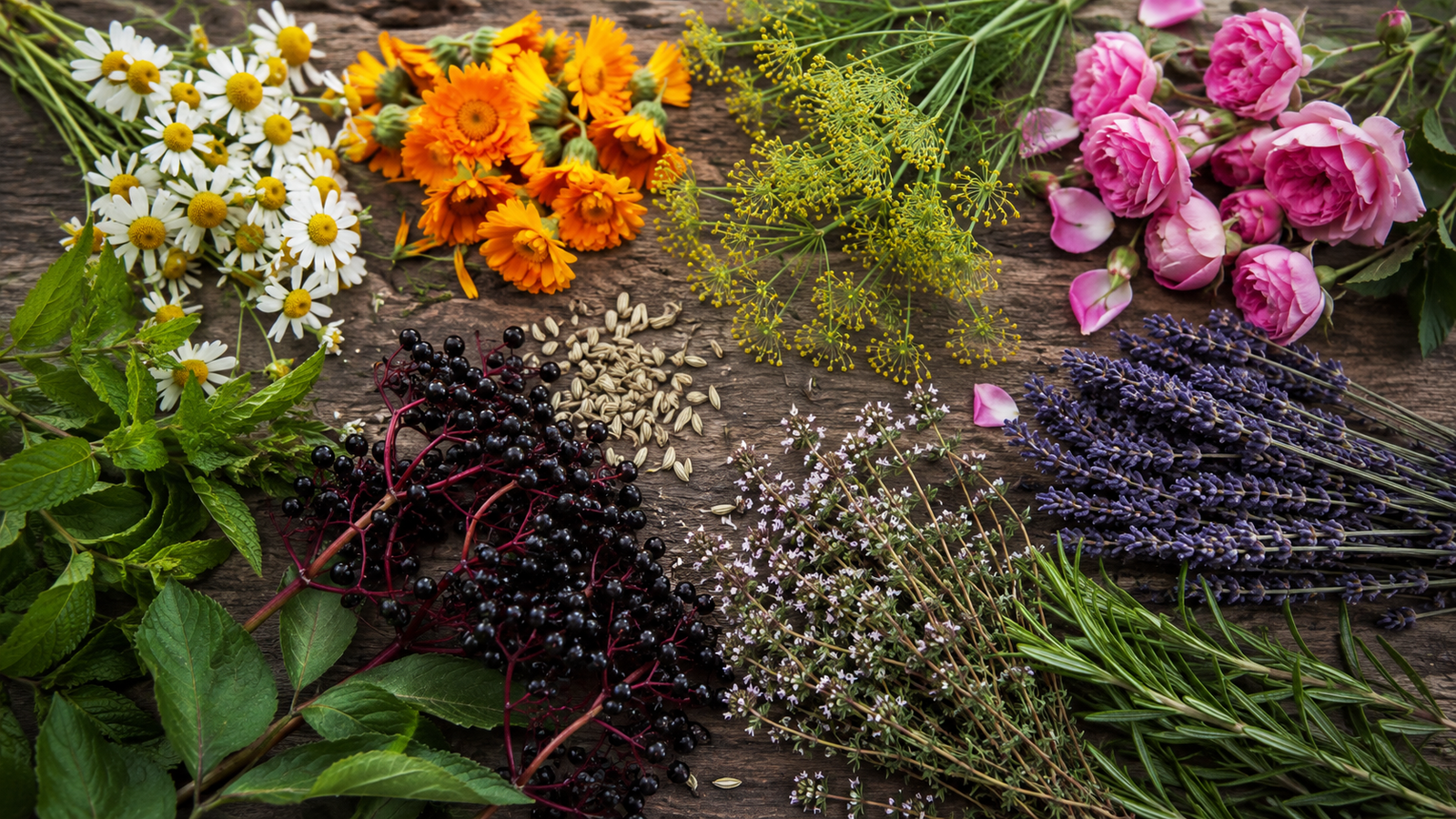
Learn to make herbal remedies in a safe, practical way
During the course you will make herbal remedies using traditional methods, with careful attention to safety, hygiene, storage and labelling. The preparations are intended for general home wellbeing and everyday comfort. They are not a substitute for professional medical advice, diagnosis or treatment.
You will be encouraged to ask questions throughout the week. When is a home preparation appropriate? When should you speak to a GP, pharmacist or qualified practitioner? How should products be labelled? How long can a homemade oil, syrup or balm be stored? These practical details matter, especially when making preparations for family use.
Herbs are natural materials and can vary in strength, scent, colour and quality depending on how and where they are grown, harvested and stored. Learning to observe those differences is part of becoming more confident with herbal preparation.
What you will be making over the five days
The course will explore a range of traditional herbal preparations that can be used to support general family wellbeing and minor everyday first aid situations. Each session will combine discussion, demonstration and practical making.
You will work with herbs that are familiar to many people, such as chamomile, calendula, peppermint, fennel, rose, lavender, thyme, rosemary and elderberry. You will also learn how ingredients such as oils, beeswax, ginger and clove can be used in traditional recipes.
All herbs, oils, waxes, jars, bottles, containers and labels are included. There is no need to buy extra materials before you attend.
Herbal teas, infusions and compresses
One of the first skills you will learn is how to prepare a proper herbal infusion. This is different from quickly making an ordinary cup of tea. Time, temperature, quantity of herb and the part of the plant being used all influence the final preparation.
We will explore herbs such as chamomile, calendula or marigold, peppermint, fennel, valerian, rose, lavender and eyebright. You will learn how herbs are traditionally combined into simple blends, including a digestive-style tea, a calming evening blend and herbs suitable for external compresses.
You will also look at the difference between internal and external use, and why clear labelling is so important. A well-labelled preparation should include the ingredients, date made, intended use and any relevant cautions.
Infused herbal oils
Infused oils are the foundation of many traditional topical preparations, including salves, balms and ointments. During the course, you will learn how dried or fresh plant material can be infused into a carrier oil using traditional and modern practical methods.
We will cover the solar infusion method, where herbs are left to infuse gently over time, and a gentle heat method. Wendy will show how a slow cooker can be used as a practical water bath to warm oils carefully and evenly.
You will discuss different base oils and how to choose one for the preparation you are making. Texture, scent, absorption and shelf life can all influence which oil is most appropriate.
Balms, salves and ointments
What is the difference between an ointment, a balm and a salve? These words are often used interchangeably, but the texture and intended use can vary. In this practical session, you will learn how beeswax changes the firmness of an infused oil and how to adjust a recipe to create a softer or firmer finished product.
You will make your own topical herbal preparation using ingredients such as calendula-infused oil and beeswax. You will also learn how to melt wax safely into oil using a Bain-Marie, how to pour into containers, and how to avoid common problems such as overheating or grainy texture.
This is one of the most satisfying parts of the week, as you see a simple infused oil become a finished product that looks, smells and feels beautiful.
Elderberry and echinacea preparations
Elderberry and echinacea are two of the best-known herbs in traditional winter wellbeing recipes. During the course, we will look at their traditional uses, plant parts, key constituents and the reasons they are often combined with warming ingredients such as ginger and clove.
You will learn how to prepare a decoction, which is often used for tougher plant materials such as berries, roots, barks and seeds. A decoction is made differently from an infusion and usually involves simmering the herbs gently in water for a set period of time.
From there, you will learn how a decoction can be transformed into a traditional syrup. We will discuss sweetness, storage, labelling and sensible use at home.
Respiratory herbs and aromatic preparations
Aromatic herbs such as thyme, rosemary, eucalyptus and peppermint have a long history of use in traditional home preparations. On this part of the course, you will explore their distinctive scents and learn how aromatic ingredients are used in steam inhalations and topical preparations.
You will make an aromatic preparation such as a chest rub, while also discussing safe use. This includes avoiding sensitive areas, considering age-appropriate use, storing products safely away from children and knowing when home care is not suitable.
We will also talk about steam inhalations, including practical safety. Hot water and steam must be handled with care, particularly around children, older adults or anyone with breathing difficulties. The focus throughout is responsible, informed home use.
More than a collection of recipes
The real value of this course is not only in the finished products. Recipes are helpful, but confidence comes from understanding the principles behind them.
Across the five days, you will learn how to select and combine herbs, the difference between an infusion and a decoction, how to prepare infused herbal oils, how to work safely with beeswax and oils, and how to create syrups, salves, balms and aromatic preparations.
You will also learn how to label and store homemade herbal products, why plant quality can naturally vary, and how to recognise situations where professional medical care is needed. This responsible approach is central to Herbalversity teaching.
Build your herbal first aid kit to take home
Your handmade herbal first aid kit will be built gradually throughout the week. Each day adds new preparations, new skills and new understanding. By Friday, you will have a collection of products that you have made yourself, along with course notes and recipes to help you continue practising at home.
Everything required for the practical sessions is included in the course price. Herbs, oils, waxes, bottles, jars, labels and containers will be provided. You simply need to arrive ready to learn, make and enjoy the process.
This is not simply a kit of ready-made products. It is an educational experience that helps you understand how traditional herbal preparations are made, why ingredients are selected and how to use them thoughtfully.
Learn from Wendy Budd, Medical Herbalist
The course will be taught by Wendy Budd, BSc (Hons), MNIMH, Medical Herbalist and founder of Budd’s Herbal Apothecary in Portsmouth. Wendy established Budd’s Herbal Apothecary in 2012 and has around 20 years of clinical herbalism experience.
Wendy is a registered member of the National Institute of Medical Herbalists and is known for her practical, welcoming teaching style. At Budd’s Herbal Apothecary, she hand-blends teas, tinctures and topical herbal formulations using high-quality botanicals, and she works holistically with clients by considering diet, lifestyle and emotional wellbeing alongside health history.
Wendy also helps train the next generation of herbal medicine students through her student clinic at Temperance Health. Herbalversity was created to make genuine herbal knowledge accessible to people in the community who want to learn about plants without committing to a full professional training programme.
A special family offer
Herbal knowledge has traditionally been passed from one generation to another. To encourage families to learn together, this course includes a special family price of £250 for one adult and one child aged six or over.
The price includes five days of practical herbal tuition, all herbs, oils, waxes and other ingredients, bottles, jars, containers and labels, course notes and recipes, all preparations made during the course, and the completed herbal first aid kit to take home.
The child must attend with their accompanying adult throughout the course. No previous experience of herbs, natural products or medicine making is needed.
Who is this course suitable for?
This course is suitable for beginners, families, plant lovers, home educators, carers, grandparents and anyone curious about traditional herbal preparation. You do not need any previous experience.
It may be especially enjoyable if you like practical, creative learning. You will be smelling herbs, weighing ingredients, blending oils, melting wax, pouring balms, making syrups and preparing labels. The atmosphere will be friendly, calm and supportive.
If you have allergies, sensitivities, are pregnant, taking medication or have a health condition, please ask before booking so that any practical considerations can be discussed. Herbal preparations can contain active plant constituents and should be treated with care and respect.
Book your place
The Make Your Own Herbal First Aid Kit course runs from Monday 10 August to Friday 14 August 2026 at Temperance Health, 25 High Street, Gosport.
Places are limited because every participant will be provided with ingredients, materials, bottles and containers for the practical sessions. Early booking is strongly recommended.
To reserve your place, visit https://buddsherbalmedicine.com/herbalversity/ or book below:
Come and spend five inspiring days learning about traditional herbal preparations, working with beautiful plant ingredients and creating a practical herbal first aid kit that is truly your own.
Important note: This course is for education and general wellbeing only. It does not replace medical advice, diagnosis or treatment. Always seek appropriate professional help for serious symptoms, ongoing health concerns, injuries, allergic reactions, breathing difficulties, infections, high fever or any situation that causes concern.