Funniest Names for a Herbal Tincture (And Why It’s OK!)
Blog Contents
If you’ve ever collected a bottle of your personalised bespoke herbal tincture from Budd’s Herbal Apothecary on Albert Road in Portsmouth, you may have wondered two things:
- Why does it taste so… earthy?
- And why does Wendy seem completely unfazed when I call it “pond water”?
After more than twenty years in clinical practice, I can confirm that some of the most delightful moments in herbal medicine are not found in textbooks, they’re found in the affectionate (and occasionally dramatic) nicknames patients give their remedies.
From “potion” to “nutty juice”, these names aren’t disrespectful. They’re personal. And when a medicine becomes personal, that’s when real consistency and meaningful change tends to follow.
First, What Is a Herbal Tincture?
Before we explore the humour, let’s clarify what we’re actually talking about.
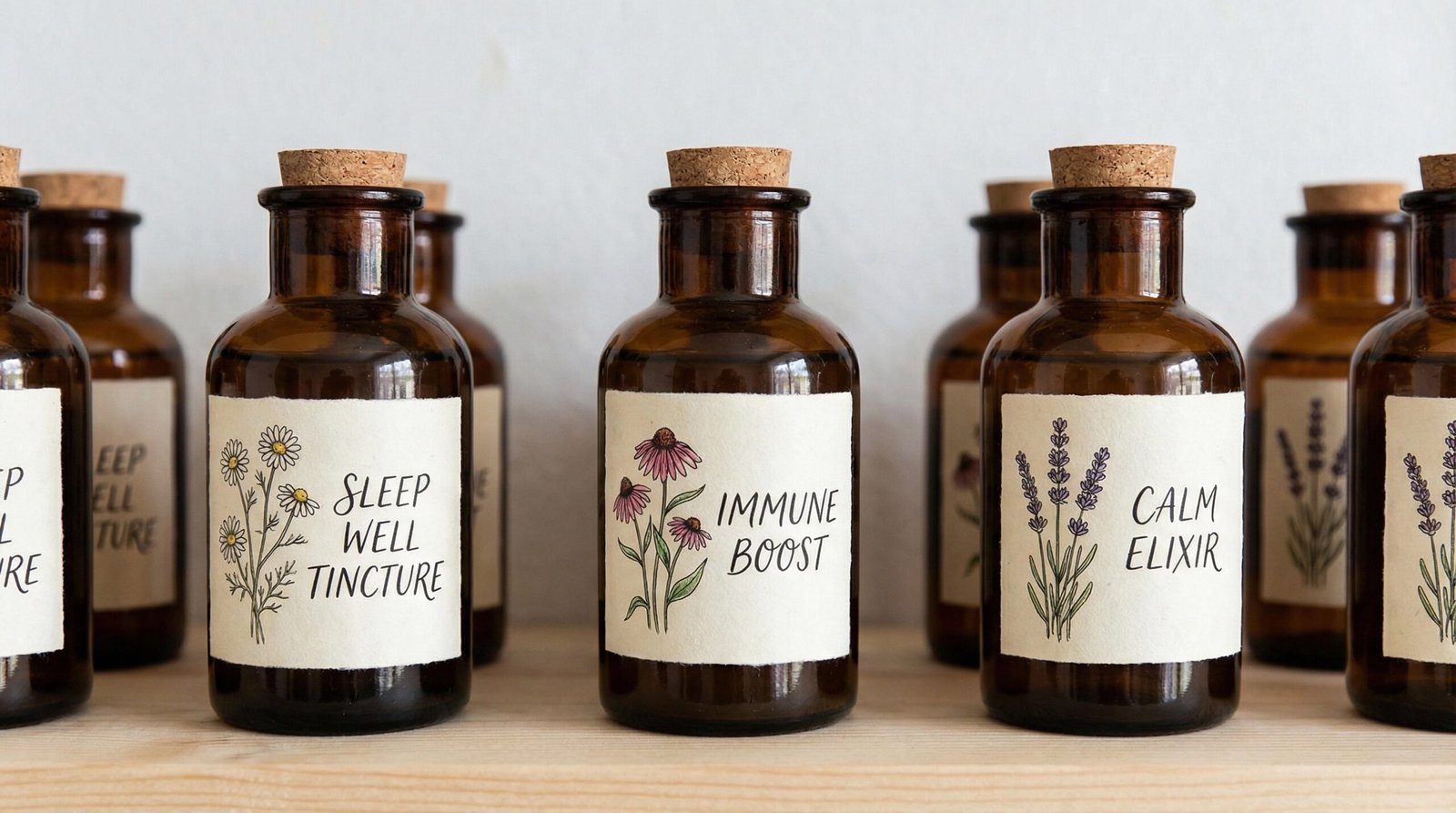
Scientifically speaking, a tincture is an alcoholic or hydroalcoholic extract of plant material, prepared by macerating fresh or dried herbs in ethanol to extract and preserve their naturally occurring constituents.
In plain English:
- The plant is soaked in alcohol (sometimes combined with water).
- The alcohol draws out a broad spectrum of plant compounds.
- The liquid is strained and bottled.
The alcohol serves three practical purposes:
- It acts as a solvent, extracting plant constituents.
- It preserves the preparation naturally.
- It assists delivery and absorption in the body.
It’s not there for drama. It’s there for function.
At Budd’s Herbal Apothecary, each personalised herbal tincture is formulated specifically for the individual following a holistic consultation. This means it reflects far more than a single symptom, it reflects the whole person: lifestyle, diet, emotional wellbeing and physiological patterns.
Why Your Tincture Doesn’t Taste Like a Smoothie
Let’s address the elephant in the room.
Herbal medicine is rarely sweet.
A bespoke herbal tincture is usually naturally:
- Bitter (such as gentian or dandelion)
- Aromatic
- Resinous
- Earthy
Bitterness in particular has a long traditional association with digestive support. The strong flavour isn’t a flaw, it’s often a reflection of the plant’s chemistry.
This is medicine, not a cordial.
And that is precisely why it earns nicknames.
The Funny Names People Give Their Herbal Tincture
Here are some of the most memorable titles patients have coined over the years, each delivered with a smile (usually after the first sip).
1. “Potion”
Description: The classic raised-eyebrow nickname. Often whispered with mock suspicion, as if it belongs in a medieval apothecary. Usually followed by, “You’re not turning me into anything, are you?”
There’s something rather lovely about this one. Herbal medicine has a long history, and the word “potion” reflects that sense of tradition. While modern clinical herbalism is firmly grounded in professional training and safety standards, the heritage aspect is part of its charm.
2. “Pond Water”
Description: Honest. Visual. Not flattering. Typically declared after examining the colour rather than the taste.
If you have a bespoke herbal tincture, it may be deep brown or green due to concentrated plant extracts. To the uninitiated, the colour can appear, shall we say, botanical. But behind that murky hue is carefully extracted plant material, hand-formulated, measured precisely and prepared to professional standards.
3. “Nutty Juice”
Description: Coined by a peri-menopause patient who cheerfully explained that while it wasn’t delicious, it stopped her feeling “nutts”.
This remains a personal favourite. Because sometimes humour is part of wellbeing. If calling your herbal tincture “nutty juice” helps you take it consistently and feel supported through life stages, then the name has done valuable work.
4. “Witch’s Brew”
Description: Usually delivered theatrically, often around Halloween, and occasionally accompanied by a cackle.
Despite the playful tone, there’s no mysticism involved. Modern herbal practice in the UK operates within regulatory frameworks, professional registration, and detailed safety consideration. The only magic involved is careful formulation and botanical knowledge.
5. “The Daily Drop of Doom”
Description: Dramatic but short-lived, especially once routines settle and it simply becomes part of daily life.
This nickname tends to disappear as people adapt to the flavour. What initially feels intense becomes familiar — a sign of habit forming and consistency building.
Bespoke Formulations: Why Your Tincture Is Unique
One of the defining features of a professionally prescribed herbal tincture is that it is rarely “off the shelf”.
At Budd’s Herbal Apothecary, Wendy Budd BSc (Hons) Herbal Medicine — a registered member of the National Institute of Medical Herbalists formulates tinctures individually after consultation.
This means your mixture may be based on:
- Your presenting concerns
- Your constitutional tendencies
- Your current life stage
- Digestive patterns
- Sleep quality
- Stress levels
- Diet and nutritional influences
Two people experiencing similar symptoms may leave with entirely different prescriptions.
That individuality often creates attachment. And attachment breeds nicknames.
Why Your Formula May Change Over Time
Another reason people become fond of (or suspicious of) their tinctures is that they evolve.
Herbal medicine is not static. As circumstances change, so may your formulation.
- Improved sleep may mean fewer calming herbs.
- Better digestion may alter the blend.
- Reduced stress levels may shift emphasis.
The aim is not permanent dependence. The intention is to support balance and resilience so that, ideally, long-term reliance on daily drops is reduced or no longer needed.
That’s good practice — and good clinical ethics.
Is It Safe to Take a Herbal Tincture?
In the UK, herbal medicine is an established professional field when practised by fully trained herbalists. As with any health decision, suitability depends on the individual.
That is why consultations are essential.
Considerations include:
- Current medications
- Existing health conditions
- Pregnancy or breastfeeding
- Alcohol sensitivity
Tinctures prescribed following a professional consultation are tailored with these factors in mind.
If you are ever unsure whether a herbal tincture is appropriate for you, speak with a qualified practitioner rather than self-prescribing from internet suggestions.
The Psychology of Humorous Nicknames
There’s actually something quite important about humour in healthcare.
When someone names their bottle “potion” or “nutty juice”, several things are happening:
- They feel engaged in their treatment process.
- They’re building a routine around it.
- They’re reducing apprehension through humour.
Consistency improves when people feel involved rather than dictated to, a nickname turns something clinical into something personal.
Herbal Medicine: Functional, Not Fashionable
We live in a world of syrupy supplements and sweetened wellness shots. Traditional herbal extracts are different.
The taste profile reflects:
- Whole plant extraction
- Minimal masking
- Preserved botanical integrity
At Budd’s Herbal Apothecary, tinctures are hand-blended using high-quality botanicals. They are formulated with careful consideration rather than flavour design.
They are intended to be taken in small, measured amounts, often diluted in water rather than consumed like a beverage.
Why I Don’t Mind What You Call It
Over two decades of clinical herbal practice have taught me something simple:
If humour helps you stay consistent, I’m entirely supportive.
What matters most is:
- You understand why you’re taking it.
- You feel involved in your wellbeing plan.
- You communicate openly about any changes you notice.
Whether you refer to it as “pond water” or “witch’s brew”, behind that bottle is thoughtful formulation, evidence-informed training, and personalised care.
The Real Aim of a Personalised Herbal Tincture
The goal of prescribed herbal medicine is not endless bottles lining your kitchen shelf.
The aim is to:
- Identify potential underlying triggers.
- Support the body’s regulatory systems.
- Encourage balance over time.
- Adjust as your needs evolve.
When someone returns months later needing less or none at all that is success.
And if along the way they’ve referred to it affectionately as “nutty juice”, then we’ve combined science with a sense of humour. A rather British approach, really.
So… What Do You Call Yours?
If you collect your next herbal tincture from our Portsmouth apothecary, feel free to give it a name.
Just remember:
- It’s individually formulated.
- It’s professionally prepared.
- It’s designed specifically for you.
And whatever the nickname, consistency and communication remain key.
If you’re curious about whether a personalised herbal consultation may be suitable for you, you’re always welcome to book a consultation.
Potion optional. Humour encouraged.