Roots of Healing: Liver Support Herbs and Addiction Story
Blog Contents
Roots of Healing: Liver Support Herbs, Addiction and Becoming a Medical Herbalist
Every year as March the 26th approaches, I find myself reflecting on my mother. That was her birthday. I do not remember the exact date she died, and in many ways I am glad. I chose to remember her life, not the day of her death. Remembering her birthday somehow keeps her alive in a way that remembering her death never could.
My mum died from alcoholism and liver failure. It is not a peaceful way to go. It is slow, complicated and deeply uncomfortable. The body begins to retain fluid, the ankles swell, the abdomen fills with fluid, and the whole system becomes overwhelmed. It is a visible physical decline, but behind it all is something far less visible: addiction.
The Roots of Healing
This story is not just about liver support herbs or herbal medicine. It is about addiction, grief, loss, and how sometimes the worst experiences in life quietly shape the direction we eventually take.
Becoming a medical herbalist was not simply a career decision for me. It came from somewhere much deeper. It came from watching someone I loved slowly destroy their health, and feeling completely powerless to stop it.
How Alcohol Affects the Liver
The liver is one of the most important organs in the human body. It is responsible for detoxification, hormone metabolism, fat digestion, blood sugar regulation, vitamin storage, and filtering blood coming from the digestive system.
Alcohol has a cumulative effect on the liver. In the early stages, regular drinking can lead to fatty liver, where fat builds up inside liver cells. This stage is often silent and may be reversible if alcohol intake is reduced.
If alcohol consumption continues, it can progress to alcoholic hepatitis, where the liver becomes inflamed and liver cells begin to become damaged. Over time, the liver attempts to repair itself, but repeated damage leads to scarring known as cirrhosis. At this stage, the structure and function of the liver are severely compromised.
This progression often happens slowly over many years, and by the time symptoms become obvious, the damage is often very advanced.
Addiction Is Not Honest
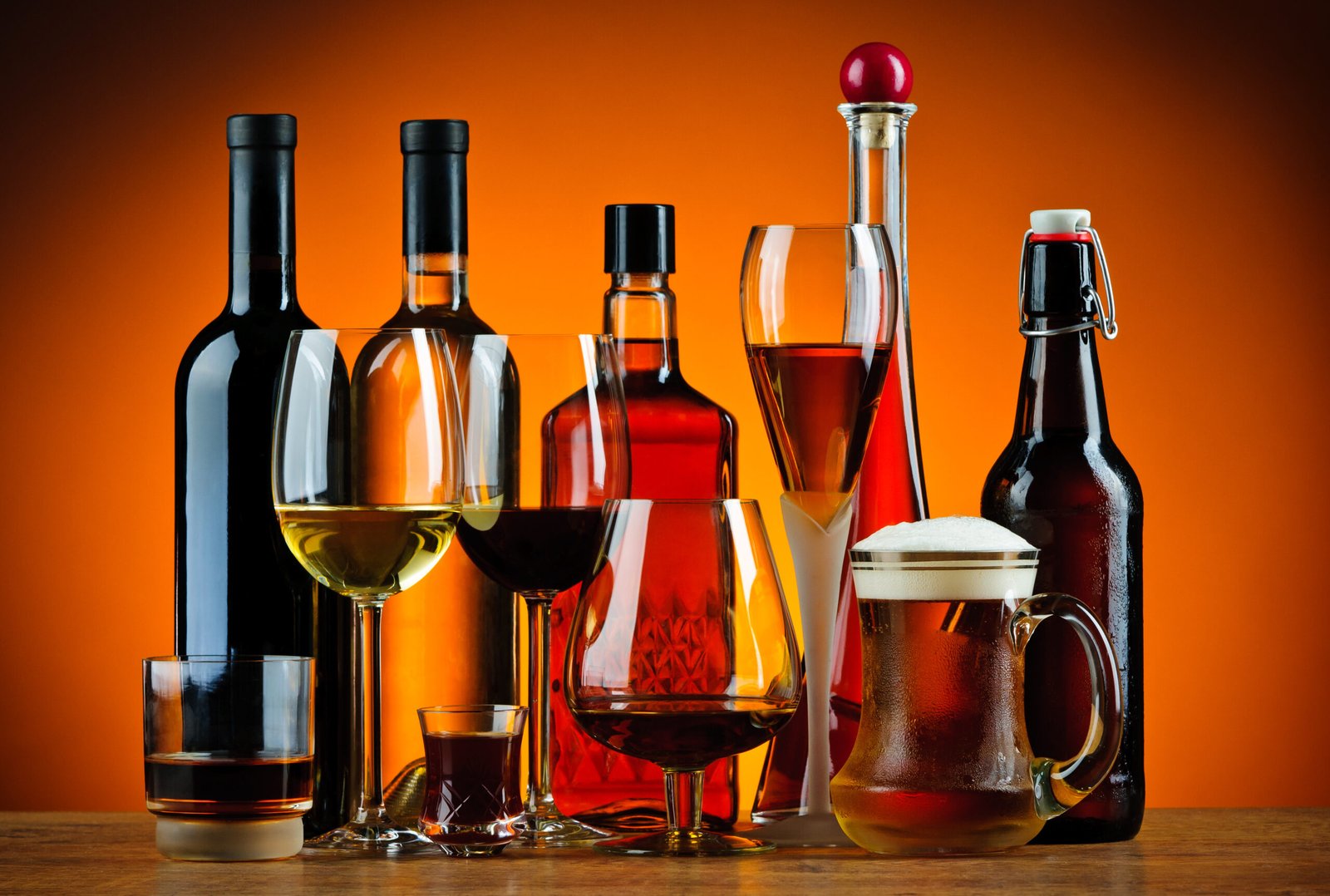
Addiction hides. It distorts reality and promises relief that it cannot deliver. As the child of an alcoholic, I grew up in a constant state of uncertainty. There were periods when my mum would stop drinking and things would feel stable for a while. But even then, I was always waiting and wondering when things would change again.
When I was younger, it did not seem so serious. In fact, it felt exciting. My mum was the cool mum. She let us drink, smoke and do things other parents would never allow. Everyone wanted to come to our house and I loved the attention.
But as I got older, the illusion faded. What once felt exciting started to look sad and out of control. The drinking was not just a personality trait. It was addiction.
How Addiction Begins
Addiction often begins quietly. A slow drift rather than a dramatic fall. My mum had a hysterectomy in her late thirties and was put on HRT. At the time I did not understand what she was going through. Now I do.
Anxiety, insomnia, withdrawal from social life, feeling unlike yourself. I can understand how a couple of glasses of alcohol in the evening might have felt like a solution. It helped her relax, helped her sleep, helped her feel normal again.
From that perspective, it does not look like addiction. It looks like coping.
The Cycle of Addiction
The cycle is always similar. There is a build up of tension, anxiety or emotional discomfort. Then comes the drink and a brief sense of relief. After that comes the crash, guilt, shame and physical discomfort. Promises are made to stop tomorrow. But tomorrow arrives and the cravings return.
Over time, drinking is no longer about enjoyment. It becomes about feeling normal and avoiding withdrawal symptoms. That is a very difficult place for someone to be.
The Impact on Family
Addiction does not just affect the person drinking. It affects the entire family. You learn to read moods, to walk on eggshells, to live in a cycle of hope and disappointment. Beneath all of it is grief, not just for what has happened, but for what could have been.
What My Mother Taught Me
Despite everything, my mum taught me something very important. She once told me she did not regret the things she had done, but she deeply regretted the things she had not done. The opportunities she missed because she was too unwell or too caught in the cycle of addiction.
That stayed with me and changed the way I looked at life.
The Beginning of Budd’s Herbal Apothecary
When my mum passed away, she left me around £5,000. It was not a huge amount of money, but in 2012 I used it to open Budd’s Herbal Apothecary on Albert Road in Portsmouth.
Looking back now, I can see clearly what drove me. I wanted to help people. I wanted to understand health. And perhaps, if I am honest, I wanted to heal because I could not heal her.
Becoming a medical herbalist was not just education and training. It was a response to grief, loss and helplessness. Herbal medicine became a way of understanding health from a wider perspective, looking at diet, lifestyle, stress, emotional wellbeing and the whole person.
Liver Support Herbs in Western Herbal Medicine
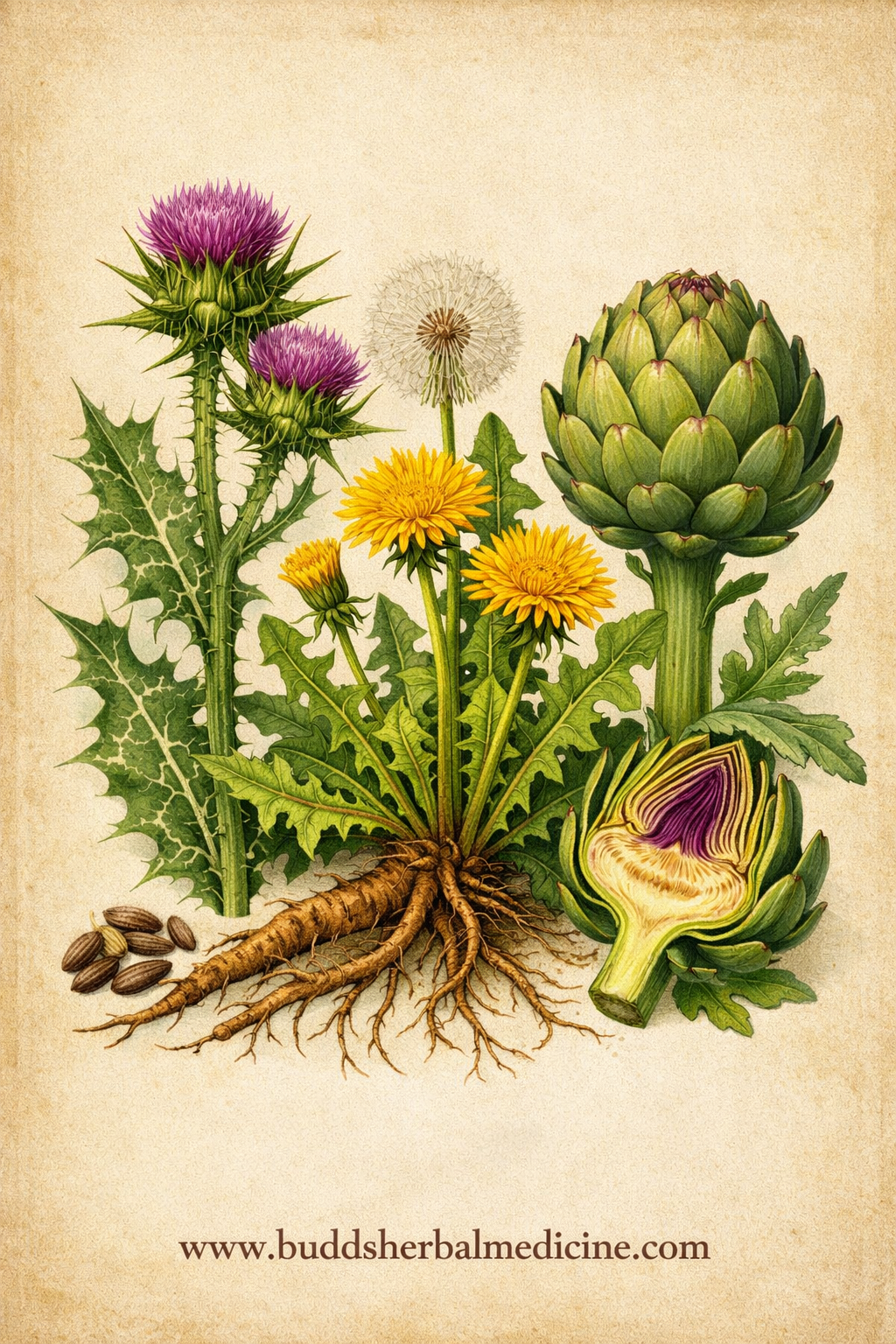
During my training and clinical practice, three herbs consistently stand out when we talk about herbs for liver health and digestive support.
Milk Thistle
Milk thistle (Silybum marianum) is probably the most well known herb associated with liver support. The active compound, silymarin, has been widely studied and is included in European herbal monographs.
Milk thistle is traditionally used in herbal medicine to support liver function and to protect liver cells from toxins. In parts of Europe, preparations derived from milk thistle are used within conventional medical settings.
Dandelion Root
Dandelion root (Taraxacum officinale) is often overlooked because it is seen as a common weed, but in herbal medicine it is highly valued. It is traditionally used to support digestion, bile flow and liver function, and is often included in digestive and liver support formulations.
Globe Artichoke
Globe artichoke (Cynara scolymus) is another important herb for digestion and bile production. It is often used when people experience bloating or discomfort after fatty meals, and it is commonly included in herbal digestive formulas.
Why the Liver Is So Important
The liver is involved in hundreds of processes in the body, including hormone metabolism, digestion, detoxification and nutrient storage. When liver function is sluggish, people may experience fatigue, digestive issues, headaches, skin problems or brain fog.
This is why liver support herbs are often used in herbal practice as part of a wider approach that includes diet, lifestyle and stress management.
The Bigger Picture About Healing
However, the most important thing I have learned over the years is this: herbs can support the liver, but they cannot fix the reasons people drink. Addiction is rarely about alcohol itself. It is often about stress, trauma, grief, anxiety, loneliness or pain.
Milk thistle can support the liver. Dandelion can support digestion. Artichoke can support bile flow. But healing always has to go deeper than physical organs.
Real healing often involves lifestyle, emotional wellbeing, purpose, relationships and meaning. Herbal medicine can play a role in that journey, but it is only one part of a much bigger picture.
A Final Thought
My experience growing up with addiction shaped who I am, the work I do and how I see people and their health struggles. It taught me compassion, resilience and the importance of looking at the whole person, not just symptoms.
We will all experience pain in life. Loss, illness, grief and disappointment are part of being human. But suffering is something different. Suffering is what happens when pain becomes your identity and defines your life.
You can become your pain, or you can choose to move forward and build something from it. In many ways, that is what Budd’s Herbal Apothecary represents. Not just herbs, but healing, understanding and helping people move forward with their health and their lives.
This article is for educational purposes only and does not replace medical advice. Always consult a qualified healthcare professional for medical concerns.